This is the part where i talk.
Showing posts with label analysis. Show all posts
Showing posts with label analysis. Show all posts
Friday, November 1, 2013

Monday, October 28, 2013
WHITE THUNDER Production Portfolio
Production Portfolio
IB Film HL
Session: May 2013
Rationale
I chose to do White Thunder because I really wanted to make a cheesy movie and experiment
with the lost art of zooms. I think that lowballing rather than super serious can be quite an
advantage with the audience. I also notice it is easier to get a reaction from the audience if you
make them laugh rather than feel bad or emotional, and my bitter reaction to my last super
serious film, the bitter tragedy of it being comedic to the audience. After seeing the film black
dynamite, I knew what I had to do for my next film.
Word Count 100
Trailer
It is a rational trailer. First, I set open framed shots in the beginning to create questions in the
viewer. The car shots and mechanized sound effects represented speed, and the zooms
accentuate fast feelings. Afterwards, I introduce Thunder and his qualities such as violent, being
a “loose cannon” and needing a partner. Panama is introduced characteristics of being cocky.
Using Andy, we establish that they are both cops down on their luck. A shot of Panama and
Thunder disagree on musical taste explains their relationship, and ending shots conclude the
bad guy’s role, Dragon Wang.
Word Count 98
Written Commentary for White Thunder
I had always wanted to do a really fun film. I had made a White Thunder short before, and
I wanted a to expand on the character. Once my co produced project Epic Roll , I knew that a
comedic cheesy fun film was something I had to make. The idea for White Thunder came from
my love of Buddy cop movies and the recent explosion of parody blaxploitation and cheesy 70’s
parodies. The plot itself is a cliched buddy cop story, present in many films from Rush Hour to
Running Scared to Bad Boys. They would always begin with introduction to the characters, how
they were forced to conform to each other, find how different they were, mess up, take the case
into their own hands, and become friends. And thus our plot was created as so.
The script began as a treatment that was created at the end of sophomore year basically
outlining the events that would transpire in the full version of White Thunder. A short “pilot
episode” screentest proving ground for the show was shot later that year but not a full version.
With the help of 3 different screenwriters, a continuous edit and a 2nd draft, we completed the
majority of the major scenes, and I was very happy with actually having a almost full script by
the time of actual production, unlike many of my other productions. Unique characters would end
up being the most important part of this film, rather that could have been an intimate relationship
between Panama and Thunder. For better or for worse, this was the influence Jonathan Nievera
brought onto the project, and this would lead to the notorious marketing campaign. My “dual
meaning backhand” blunt style of writing was somewhat present in this project, as in the intro
scene, which was loosely scripted. For example, Thunder says “ Stop being a pansy, Jet. You
know I love you...” which at first glance is not inherently obvious, but under tighter scrutiny is
clearly recognized. The script was a marvelous thing, it created not only cohesion and efficiency,
but direction on the project., and was very beneficial.
Setting the film as a period piece was really a challenge with this film. Having to amass
the wardrobe, sets, props and even vehicles for such a large project was quite an undertaking,
but I think it was a really good learning experience. Even behind the scenes our film was a period
piece; This type of practical effect, home movie blockbuster production harkens back to the 70’s
Super 8 genre style filmmaking usually identified with Spielberg’s early works, and homaged to in
the film Super 8. To that end, each character in our film was uniquely characterized by their
wardrobe and choice of props. For example, White Thunder uses a large .45 Colt, and Panama
Jack uses a small, almost insignificant .22 revolver. Thunder is a brash and hulking fighter,as
well as speaker, whose large and flamboyant style may not actually relate to his actual
effectiveness. Panama, on the other hand, is a small and sly guy, he can hide his secrets until
he wants to strike. However, most of the Panama direct characterization didn't make it through
the first few drafts, and his character is very flat, letting the script focus more and Thunder’s
epiphany. Dreyfus has suspenders to suggest his maturity and wisdom, and the “Other Buddy
Cops” wear Hawaiian shirts not only to address the era, but to also suggest their laid back
nature, contrasting with their reactions later, creating ironic comedy. Dragon Wang Chan wields
a large, blunted sword to suggest his way of getting things done; he is a doppelganger to
Thunder, in the egotistical sense, he is the dark side of Thunder, brutal, blunt, and violent. The
setting of the film was important as well, many of the assorted sets we tried our best to adapt it
to be period acceptable or try to not face the camera towards such things as flatscreens and
cars. Modern cars are however a major error in the film, but are very luckily very subtle. The
choice of Penn School seemed to fit with it’s Cold War Era Architecture, the rest of the locations
were time period anonymous. The use of cars in films seems to be ramping up. Our usage of a
the 1976 red Chevelle was a little different. Because our car was restricted by time, driver, and
the fact that it was old, we decided to go with the green screen route rather than practical.
Conversely, practical effects were an interesting but briefly used in our film. The blood spurts
were created from a air compressor and fake blood in surgical tubing, clogged at the end with a cut piece of a rubber glove. The dummy was a old scuba suit, filed for hours upon hours with newspaper “salvaged” from the neighborhood, and the head was an equally laborious process. I wrapped Jon’s head in an old cloth, and then duct taped its crevices (of course with breathing holes) , and filled with newspaper as well. It was promptly thrown from the roof as a test.
My job on the film was Cinematographer. I really wanted to experiment with zooms in this
project, a sort of underused art. In my research, I found the reason that zooms were so prevalent
in the 70’s was because they had just reached the mass market and were now “new”. Films
during the era had used so many zooms to simply show off their new technology, but as a result,
prime lenses not being used and smaller aperture of zooms led to more exterior day shots and
less low light shots. White Thunder had to have a lot of light pumped into it, as present in the
Andy Litili scene, because most of the film was actually shot at f/8. Stopping down the f stop also
helped with the zooms, as being at a lower aperture meant less depth of field, meaning easier
focus between zooming. Similarly, I found it to be increasingly annoying that short films shot with
DSLR’s made shallow depth of field almost cliche, many shooters rarely stopped down manually
and as a result had trouble pulling focus.
The DSLR revolution has let even the smallest budgeted film maker capable of capturing great images, but as a result the “market” you could say was over saturated with shallow depth of field films. It is quite interesting that zooms were originally the new craze, just coming to market, and now filmmaker are rediscovering, and in some cases overusing the prime lenses of old.
Another aspect I noticed was people who do not use primes shooting at the widest FOV
possible, say 18mm on a T2i. While this is not a bad thing, in fact I quite like it’s epic sweeping
feel, its not what I wanted to do with White Thunder. I used the Panasonic GH2, a smaller name
than the widely used and trusted Canons, to represent not only the reaction, but as reference to
the era itself. The GH2 has a smaller sensor, but more sharply grained noise camera that is
widely regarded but rarely used by the filmmaking community. Even buying this camera was my
reaction to modern filmmaking: everyone had Canons, and if i wanted to I could borrow those at
any time. Why not try something new? White Thunder, at its core, is a BMovie,
and at that time they were shot on 16mm film, smaller than 35mm cinema; therefore, shooting on smaller sensor would make sense and add to the overall period feel of the film. Making White Thunder was my
antithesis to the modern DSLR filmmaking age, as this is clearly present in the zooms, stopped
down aperture, lack of sliders, longer lenses, and usage of smaller camera sensor. However, I
am not completely immune to falling into such self set pitfalls. As exterior scenes and naturally lit
scenes became darker as night approached, I was forced to open the aperture to, I dare say,
blasphemous f/4.5. This, paired with my innate ability to not sense when things are slightly out of
focus, led to some shots being blurry, which I take complete responsibility for.
And score. Indie production is not without its difficulties, but the film scorer is always the
worst. I must say, working with Jonathan Nievera was very beneficial in bringing another mind
onto the intellectual property of the film, but relying on him to do score was the worst experience
of my life. Numerous times he checked out the audio gear and not once did he return with
anything. Not even loops, and despite devoting and promising he would deliver, he did not.
My critical analysis of the film was that it was a fun adventure buddy cop film but with
some issues in pacing and sound. The film was deeply influenced and teat genre research
shows throughout the film, with very good attention to detail in costumes, sets, and ways of
speaking. The acting was a little underdone, but it kind of fit with the B movie style and era piece.
The Cinematography also represented the era with zooms and lack of depth of field, but there
were some issues of inexperience with the zooms that made them choppy. Editing was very
compressed and kind of sloppy, leading to some bad pacing during the Informant scenes. Sound
design and score was very lacking in this project and the weakest link overall. Overall it was very
fun to shoot and the actors play it out, leaving the audience feeling the same.
Word Count: 1600
Marketing Campaign
https://www.facebook.com/WhiteThunderShow
IB Film HL
Session: May 2013
Rationale
I chose to do White Thunder because I really wanted to make a cheesy movie and experiment
with the lost art of zooms. I think that lowballing rather than super serious can be quite an
advantage with the audience. I also notice it is easier to get a reaction from the audience if you
make them laugh rather than feel bad or emotional, and my bitter reaction to my last super
serious film, the bitter tragedy of it being comedic to the audience. After seeing the film black
dynamite, I knew what I had to do for my next film.
Word Count 100
Trailer
It is a rational trailer. First, I set open framed shots in the beginning to create questions in the
viewer. The car shots and mechanized sound effects represented speed, and the zooms
accentuate fast feelings. Afterwards, I introduce Thunder and his qualities such as violent, being
a “loose cannon” and needing a partner. Panama is introduced characteristics of being cocky.
Using Andy, we establish that they are both cops down on their luck. A shot of Panama and
Thunder disagree on musical taste explains their relationship, and ending shots conclude the
bad guy’s role, Dragon Wang.
Word Count 98
Written Commentary for White Thunder
I had always wanted to do a really fun film. I had made a White Thunder short before, and
I wanted a to expand on the character. Once my co produced project Epic Roll , I knew that a
comedic cheesy fun film was something I had to make. The idea for White Thunder came from
my love of Buddy cop movies and the recent explosion of parody blaxploitation and cheesy 70’s
parodies. The plot itself is a cliched buddy cop story, present in many films from Rush Hour to
Running Scared to Bad Boys. They would always begin with introduction to the characters, how
they were forced to conform to each other, find how different they were, mess up, take the case
into their own hands, and become friends. And thus our plot was created as so.
The script began as a treatment that was created at the end of sophomore year basically
outlining the events that would transpire in the full version of White Thunder. A short “pilot
episode” screentest proving ground for the show was shot later that year but not a full version.
With the help of 3 different screenwriters, a continuous edit and a 2nd draft, we completed the
majority of the major scenes, and I was very happy with actually having a almost full script by
the time of actual production, unlike many of my other productions. Unique characters would end
up being the most important part of this film, rather that could have been an intimate relationship
between Panama and Thunder. For better or for worse, this was the influence Jonathan Nievera
brought onto the project, and this would lead to the notorious marketing campaign. My “dual
meaning backhand” blunt style of writing was somewhat present in this project, as in the intro
scene, which was loosely scripted. For example, Thunder says “ Stop being a pansy, Jet. You
know I love you...” which at first glance is not inherently obvious, but under tighter scrutiny is
clearly recognized. The script was a marvelous thing, it created not only cohesion and efficiency,
but direction on the project., and was very beneficial.
Setting the film as a period piece was really a challenge with this film. Having to amass
the wardrobe, sets, props and even vehicles for such a large project was quite an undertaking,
but I think it was a really good learning experience. Even behind the scenes our film was a period
piece; This type of practical effect, home movie blockbuster production harkens back to the 70’s
Super 8 genre style filmmaking usually identified with Spielberg’s early works, and homaged to in
the film Super 8. To that end, each character in our film was uniquely characterized by their
wardrobe and choice of props. For example, White Thunder uses a large .45 Colt, and Panama
Jack uses a small, almost insignificant .22 revolver. Thunder is a brash and hulking fighter,as
well as speaker, whose large and flamboyant style may not actually relate to his actual
effectiveness. Panama, on the other hand, is a small and sly guy, he can hide his secrets until
he wants to strike. However, most of the Panama direct characterization didn't make it through
the first few drafts, and his character is very flat, letting the script focus more and Thunder’s
epiphany. Dreyfus has suspenders to suggest his maturity and wisdom, and the “Other Buddy
Cops” wear Hawaiian shirts not only to address the era, but to also suggest their laid back
nature, contrasting with their reactions later, creating ironic comedy. Dragon Wang Chan wields
a large, blunted sword to suggest his way of getting things done; he is a doppelganger to
Thunder, in the egotistical sense, he is the dark side of Thunder, brutal, blunt, and violent. The
setting of the film was important as well, many of the assorted sets we tried our best to adapt it
to be period acceptable or try to not face the camera towards such things as flatscreens and
cars. Modern cars are however a major error in the film, but are very luckily very subtle. The
choice of Penn School seemed to fit with it’s Cold War Era Architecture, the rest of the locations
were time period anonymous. The use of cars in films seems to be ramping up. Our usage of a
the 1976 red Chevelle was a little different. Because our car was restricted by time, driver, and
the fact that it was old, we decided to go with the green screen route rather than practical.
Conversely, practical effects were an interesting but briefly used in our film. The blood spurts
were created from a air compressor and fake blood in surgical tubing, clogged at the end with a cut piece of a rubber glove. The dummy was a old scuba suit, filed for hours upon hours with newspaper “salvaged” from the neighborhood, and the head was an equally laborious process. I wrapped Jon’s head in an old cloth, and then duct taped its crevices (of course with breathing holes) , and filled with newspaper as well. It was promptly thrown from the roof as a test.
My job on the film was Cinematographer. I really wanted to experiment with zooms in this
project, a sort of underused art. In my research, I found the reason that zooms were so prevalent
in the 70’s was because they had just reached the mass market and were now “new”. Films
during the era had used so many zooms to simply show off their new technology, but as a result,
prime lenses not being used and smaller aperture of zooms led to more exterior day shots and
less low light shots. White Thunder had to have a lot of light pumped into it, as present in the
Andy Litili scene, because most of the film was actually shot at f/8. Stopping down the f stop also
helped with the zooms, as being at a lower aperture meant less depth of field, meaning easier
focus between zooming. Similarly, I found it to be increasingly annoying that short films shot with
DSLR’s made shallow depth of field almost cliche, many shooters rarely stopped down manually
and as a result had trouble pulling focus.
The DSLR revolution has let even the smallest budgeted film maker capable of capturing great images, but as a result the “market” you could say was over saturated with shallow depth of field films. It is quite interesting that zooms were originally the new craze, just coming to market, and now filmmaker are rediscovering, and in some cases overusing the prime lenses of old.
Another aspect I noticed was people who do not use primes shooting at the widest FOV
possible, say 18mm on a T2i. While this is not a bad thing, in fact I quite like it’s epic sweeping
feel, its not what I wanted to do with White Thunder. I used the Panasonic GH2, a smaller name
than the widely used and trusted Canons, to represent not only the reaction, but as reference to
the era itself. The GH2 has a smaller sensor, but more sharply grained noise camera that is
widely regarded but rarely used by the filmmaking community. Even buying this camera was my
reaction to modern filmmaking: everyone had Canons, and if i wanted to I could borrow those at
any time. Why not try something new? White Thunder, at its core, is a BMovie,
and at that time they were shot on 16mm film, smaller than 35mm cinema; therefore, shooting on smaller sensor would make sense and add to the overall period feel of the film. Making White Thunder was my
antithesis to the modern DSLR filmmaking age, as this is clearly present in the zooms, stopped
down aperture, lack of sliders, longer lenses, and usage of smaller camera sensor. However, I
am not completely immune to falling into such self set pitfalls. As exterior scenes and naturally lit
scenes became darker as night approached, I was forced to open the aperture to, I dare say,
blasphemous f/4.5. This, paired with my innate ability to not sense when things are slightly out of
focus, led to some shots being blurry, which I take complete responsibility for.
And score. Indie production is not without its difficulties, but the film scorer is always the
worst. I must say, working with Jonathan Nievera was very beneficial in bringing another mind
onto the intellectual property of the film, but relying on him to do score was the worst experience
of my life. Numerous times he checked out the audio gear and not once did he return with
anything. Not even loops, and despite devoting and promising he would deliver, he did not.
My critical analysis of the film was that it was a fun adventure buddy cop film but with
some issues in pacing and sound. The film was deeply influenced and teat genre research
shows throughout the film, with very good attention to detail in costumes, sets, and ways of
speaking. The acting was a little underdone, but it kind of fit with the B movie style and era piece.
The Cinematography also represented the era with zooms and lack of depth of field, but there
were some issues of inexperience with the zooms that made them choppy. Editing was very
compressed and kind of sloppy, leading to some bad pacing during the Informant scenes. Sound
design and score was very lacking in this project and the weakest link overall. Overall it was very
fun to shoot and the actors play it out, leaving the audience feeling the same.
Word Count: 1600
Marketing Campaign
https://www.facebook.com/WhiteThunderShow
Wednesday, September 4, 2013
Contemporary Media Analysis
1. What does the media say about the world we live in?
Media creates a shared reality in our society. It projects the feelings of its creators as well as the needs of the audience to create an image of reality that we crave to see, whether we fear it, lust for it, or wish to experience it without discourse. Furthermore, a shared cultural attitude, it seems, creates the media we consume legitimate and acceptable. Media presents us with what someone thought was acceptable, and we consume and decide. Not only does it reflect ideas in a society, it can propagate these ideas, influencing a society and around and around and around. Media defines what a society thinks about, but not necessarily what it is. Media is revealing that lines between the good and bad (transferred over from wars) are blurred, such as Walt in breaking bad trying to gain money for his family, or the many possible protagonists in Game of Thrones. There are also more positive things such as an increasingly accepted homosexuality in society (like on Glee) and the acceptance of Nerd Culture in Big Bang Theory. Furthermore, we are seeing more sexuality and especially more violence on TV and in movies as part of medias increasingly inferiority complex.
 2. Do you notice any one trend that keeps resurfacing through multiple media forms?
A trend that continually resurfaces itself through multiple media forms is the idea of blurred lines. This can apply to the distinction of the protagonist and antagonist, and even to the distinction between good and evil in a protagonist, such as the anti-hero, which seems to be present in almost every work ever since the 70’s. Almost every modern TV show a new edgy “anti hero” who either conflicted about what he does because of his own morals, or we question his decisions by our own moral standards.
3. What do you see as the best and worst of what media portrays?
 Media’s best usage is at its core, a tool. A tool of expression and consumption. As such, people feel the need to consume McDonalds Burger Meat when they also have Fillet Mignon with Salad on the menu. The worst of media is the stuff that ends up on TMZ, and I’m sure everyone is a likable person, with the benefit of a doubt, but acceptance of the hick culture or late with Duck Dynasty and Honey Boo Boo is for me a success and a failure. Its the acceptance of a culture, but is that appropriation and propagation a positive? Furthermore,
  On the flipside, Media has been opening up to accept many things lately. Of course, the hick culture as above, but also Homosexuality and nerd culture have come to acceptance. Homosexuality, in particular, has been getting alot of play in many modern shows, for one, Glee is a landmark in teenage homosexual fiction, and its popularity brings its closer to mainstream.
Nerd culture has particularly come into play, not only on the TV circuit, but on the Internet Media as well(if not mainly). Big Bang Theory in the mainstreaming of nerd culture on a major television show where general audiences pretend to understand references that the cult followers really appreciate. On the internet, many what would be considered “geeky” web shows have risen to popularity, in a direct correlation with the mainstreaming of video games.
4. Where do you see yourself contributing to the conversation?
I see myself as a person obsessed with pushing the envelope. Continually film class creates an environment where healthy competition creates an ever innovating environment, leading to new boundaries to be broken with every film. I've worked on the first war film at Cappuchino Film, a sexually charged noir film, and a film that sets new standards in violence through comedy.
Media always needs ways to excite. And in the ever growing capitalist society we live in, media because raunchier and more violent every year. I feel like this trend, like all expanding trends, lead to a depression or inflation of the market and then to collapse. Therefore, I feel that media needs to come to grips that they can't always outdo last season; but more importantly: the consumer needs to do the same. If I ever do contribute to the media itself, it will be the consumers who define what they want and how I can entertain them.
Tuesday, August 20, 2013
My Top 5 Film of All Time
 I think many people cant pin down their favorite film. For me I'm sucker for any one of these tings:
- 1930's-1950's Period Piece
- The Cold War
- A great film score
- Medieval Fantasy
- Rallying speeches/ Monologues in film
- A bunch of friends go on an adventure
- Revenge
- good production design (Mis en Scene)
Friday, August 16, 2013
What Makes a Good Film
Hint: Its not one thing
Asking "What Is a Good Film?" is very broad. A film can succeed in pleasing on different levels, visually, in sound design, in writing, in acting... and every other award show category. But unless the film as a sum of its parts can achieve your reception of the intended feeling and message in a exciting way, it wont resonate with your audience like truly great piece of cinema.
There are no rules in filmmaking. Only sins. And the cardinal sin is dullness.
- Frank Capra
To start simple, a good film, you might say, is one that excites an audience. Whether it be as simple as an engaging relationship drama between that pale girl and an Abercrombie vampire, a deranged serial killer running amok the back roads, or a intergalactic saga of Farmboy bravery , different films speak to and excite different people. And how does one excite an audience? A well crafted film is one that makes connections with the viewer, relations in the subconscious that stimulate psychological and metaphysical existence .... blah blah blah. And explosions.
Dig me this, why is a film good? Because you want to be Indiana Jones.
 |
| Tell me more. |
Sunday, February 17, 2013
IB FILM Sample Oral - Psycho
There is a coherent, incisive, insightful and richly detailed evaluative interpretation of the
extract, displaying an excellent understanding of how meaning is constructed through the use
of film language, with an excellent awareness of the extract’s relationship to the film as a
whole. There is a persuasive explanation for the selection of the extract. The critique shows
an excellent awareness of the film’s genre, its place in a broader sociocultural context, and
gives an insightful analysis of the director’s intention. Simple description will be negligible and
analysis will be clear and thorough.
21-25 Marks
For my Practice Oral, I did Alfred Hitchcock's film Psycho. By listening to myself I could accurately assess and see weaknesses and strengths in my presentation.
I think I talked too much about the setting and visual design of my extract and did not talk about the cultural pressures on the film as much as I wanted to. This was because I felt my extract adressed these sections more that others. I also kind of stumbled on the speaking section and could have been much more prepared for the oral in terms of content and organization. For example, I should have paused and thought about what i was going to say rather than stuttering and being incoherent. I did not write notes as large as I wanted but I thought that did fullfil the oral.
CAS Film:
Fallen Tear Productions
Thursday, January 31, 2013
Film Language and Representation Post
Film Language and Representation
Using your choosen 5 minute extract, tie the particular details of the scene back to your broader research.


My extract takes place at 1:30:32. So far, the audience has come to see Marion be killed in the shower by Norman Bates, a, well, psycho, and subsequently having an inspector then Marion's sister Lila and boyfriend Sam investigate what happened to the previous person. In the extract itself, Lila sneaks into Norman's house while Sam distracts him with small talk in the lobby of the motel. The intensity increases, and suddenly Norman ca't take it anymore, these insults to his mother, and hits Sam in the head, running after Lila. Lila is exploring the house during these events, first examining the mothers room and its intricacies, and then later looking at Norman's room and its simplicity. As Norman enter she house, she goes down into the cellar, unknowing of the truth. My extract ends with her seeing the mummified remains of the mother and her screaming horridly as Norman descends on her. The characters and issues are represented in my extract through Norman's fight with Sam, well as Lila's meeting with the corpse. The issues here are that Norman is now for sure having some kind of identity crisis over his mother, becoming overtly suspicious when he becomes offended by Sam's every remark. Another issues is what Lila finds in general. Firstly, she finds a bed with a deep imprint, meaning someone has slept there very recently (throwing off the viewer). Secondly, Lila is in Normans room and it appears as a kids room despite the fact Norman is a grown man. This mystery and suspense culminates as we reach the final issues, the fruit cellar, where Norman's mother turns out be be nothing but a taxedermised corpse. And the Norman appears in drag.

The performance of Janet Leigh, Anthony Perkins, and John Navid Gavin very dramatic.
From the screams, to the more subtle insinuation of Sam (Gavin), to the stuttered talking of Norman, all the characters interpretation of the dialogue is appropriate and complementary to the scene. It is interesting to note that the dialogue between Sam and Norman (Perkins) is under different subtexts for the both. Norman thinks that Sam is trying to blame his mother for something but the fact of that matter is that Sam is only wondering where the money is and hasn't even thought that Marion could have been murdered. Both Sam and Lila are obvious to the truth, as Lila even tries to nudge Norman's mother and address's her. Its also interesting to note that Anthony Perkins also changes his facial expression drastically depended what character eh is playing. For example in teh photo above he has a huge grin on his face, whereas Norman is usually always in a slight sorrow.
Speaking of this shot above, this shot uses cinematography and proxemics to create meaning. Lila is situated lowest and the cameras is at an low angle, looking up to Norman (as his mother). This creates an inferiority of both Lila and th audience and we feel threatened. Similarly, Sam comes up from behind Norman and again repeats this same usage of proxemics: he is then the most dominant in scene and therefore overpowers Norman. Another example of this proxemics and cinematography meaning, is when Sam and Norman are talking, they discuss the fate of Marion. Again, when Norman is lower in frame he seems to be defensive. Similarly when Norman becomes more aggressive he shirfts to a higher plane of eye axis than Sam asserting his superiority. And finally, camera moves are used to emphasize certain things in frame. For example, A slight dolly in to Norman being restrained by Sam and the knife in his hand suggests there inherent importance in the scene. Lighting plays a small role in creating more creepiness to the mother, as overhead eighth sources are usually so.

The editing style used is one of a combination of realistic and classic styles of editing; present in the dialogue scenes is realism, and present in the more action intense scenes is cutting that adds to teh pace of the film, quick cuts, and there fore, classicism. The use of realism in the scene with Norman and Sam reveals the Norman nature of the scene.
The film uses setting very much so in this extract The film uses set design to create entire characterizations of the characters for example, the mothers room is full of archaic and old funriture, giving it the creepy haunted house feeling. Light is obscured byt eh stain glass windows, and black angel statues fill the halls. The film makes use of emptiness in the cellar to suggest just that: emptiness and alone... -ness. Just the very fact that it is ins a cellar really does make it that much creepy-er.
Monday, January 28, 2013
Historical and Institutional Influences

 Hitchcock was unable to get backing from any studio for Psycho. It was so radical (not to mention violent) for the time that no studio would pick it up and thought they could market and make money from it. Combined with his disgust for the studio system (but love of the sound stage itself), Hitchcock had to produce and direct the film himself, ans use the crew from Alfred Hitchcock Presents to cheaply produce the film and eventually he gave the rights to Paramount to distribute it.
Wednesday, January 16, 2013
Hitchcock- Genre and Audience

 The movie is based on the 1959 novel of the same name by Robert Bloch and the screenplay was by Joseph Stefano. This novel was also influenced by Ed Gein, who was a murderer and grave robber that lived close to Bloch in Wisconsin. In addition Norman Bates was also a murderer in a rural area. The film actually alludes to several other works,this includes Marion, who's character was influenced by Persephone, in Greek mythology. This is seen in the flower wall paper room, this representing Persephone's flowers, but they are only reflected in mirrors. Furthermore the section of the film when we see Marion's eye still open after she is killed was taken from La Dolce Vita when the sea creature's eye is left open in the end of this film.
Hitchcock is widely known as the "master of suspense" by critics and theater-going folk, due to his choice to usually make such films exclusively. The choice of black and whit in such an era really shows its lower budget, yet it really adds to the atmosphere of the film. In fact the man himself was quoted as saying that they couldn't shoot in color even if they had the money, it would have been too violent. However, his budget was very low, in a Hitchcock sort of style. Alfred Hitchcock made this film for the adult audience. It fulfills the wants of the mature horror audience, by providing sexual reference and innuendo, blood and gore.
The film revolves around the theme of double identity. All the characters in the film are leading double lives, from the protagonist Marion Crane to her lover, Sam, to Norman Bates Himself all characters
Marion leaves her job to be with her lover during lunch, and likewise Sam of course, has a lover. Norman Bates is of course, well, I wont spoil it. You have to watch it from the beginning you know.
The film revolves around the theme of double identity. All the characters in the film are leading double lives, from the protagonist Marion Crane to her lover, Sam, to Norman Bates Himself all characters
Marion leaves her job to be with her lover during lunch, and likewise Sam of course, has a lover. Norman Bates is of course, well, I wont spoil it. You have to watch it from the beginning you know.
Friday, January 11, 2013
From Silents to Studio Golden Years
 All the studios knew about it. It was a technology that had been dormant for years... It was...
Sound! You may have thought this post would be a rant on the shortcomings and annoyances in 3d, but rather I present to you a short history of sound in film.
The Studio System
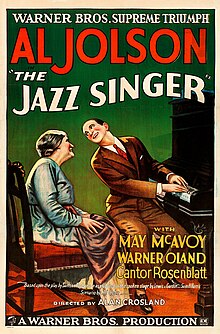 Originally, sound was opposed by the studios for many reasons. Many studios thought the public might not accept sound. Another was the actors; many were silent film stars with garish foreign accents and hadn't had proper voice or stage training meaning they would actually have to remember lines! (Oh the horror!). They had already prompted these stars and loosing them in the transition to sound could mean wasted investments. Speaking of money, sound would necessitate the building of larger sets and the purchase more expensive camera gear. Even theaters were not ready for this new technology. As the studios began to develop sound films starting with The Jazz Singer, Talkies eventually became the norm within a few years.
The Studio System
Tuesday, January 8, 2013
Writing about Film
FILM ANALYSIS

Second is Film History. Film History I can show ideas through thematic elements, through the film itself. This kind of analysis focuses on the history and related history of the film.
Third is an Ideological Paper. This form of film analysis is an analysis that promotes sets of beliefs and biased opinions towards other causes.
Next is Cultural Studies and National Cinema. This form of Film analysis reflects cultural perspectives and backgrounds. In this form of analysis, you can visualize how certain nations create unique films influenced by their culture.
Finally, the last form of film analysis is the Discussion of the Auteur. The Discussion of the Auteur is a paper that analysis the possibility of an auteur in the production of a film. An auteur is someone who is supposedly responsible for every major aspect of the film; from editing to shooting to directing to even cinematography; the auteur also gets much credit, instead of the art design team, among others.There is a solid line in where one cannot derail from, but that’s a common misunderstanding as many people are needed to make a film successful. It’s the collaboration of the director, the editors, and designers that make a film successful.
Notes on films you plan to analyze are essential. You can include basic notes, but you will not profit from them if you do not special “film notes.” These include the types of individual shots used in each sequence. This makes it easier to keep track of the scene when reviewed later. This is also beneficial as it provides insight into patterns of the cutting of the film and how those cut influence the audience's feeling towards them.
By saying “Think Beyond the Frame” you ask yourself “Who made the film?”and find out who directed the film, and what other films this director made. From this, you distinguish similar creative choices from the director and styles. You also ask “What is the production history of the film?” and how that affected the film or relates to the society or message of the film 9again checking if, say over budget, is a pattern with this director). You also ask yourself “What can you learn from the film's genre?” And finally, “Does the film reflect an interesting cultural phenomenon?” Events of movements in time can influence films more than what is simply seen onscreen. In conclusion, Film Analysis is not a summary, but a very diverse and deep kind of subdivsion filled analyes.
Tuesday, December 4, 2012
The Hobbit: An Unexpected Journey Trailer Review

The trailer for The Hobbit clearly effectively expresses the basic storyline of the film, through narration as well as visual montage, while still leaving the viewer wanting more. We are first set up though old Bilbo explaining that he never fully explained his adventures top Frodo and thus, it is assumed this movie is about his exaggerated adventures from his perspective, setting up the plot. By starting off with Frodo from Lord of the Rings, we also are connected to the narrative and backstory of that trilogy. Afterwards young Bilbo explains he is reluctant to go on the adventure, setting up the conflict. We are introduced to the dwarves, through narration and montage of their faces, setting up the characters. These quick clips also add to their character, as each shot gives the dwarves different attributes ranging from fat to agile to raging warrior, and sets Thorin up as leader though narration by Gandalf. Intercut are title slides giving the date of release but also using a map serving to orient the viewer. The mysterious chant of the dwarves and slow tracking shots give an epic and mysterious quality to the shots establishing both feel and setting. It also further establishes Thorin as leader of the dwarves when hes stands up first in the ominous chant. A dutch tilt shot of Gandalf gives another aspect of creepiness to the story, and a shot of Galadriel moving Gandalfs hair in a loving way seems to suggest a relationship not scene in Rings. At the end there a is a quick reveal of everyones favorite Mo-Cap, Gollum.
All in all, epic trailer, Pete.

Tuesday, October 9, 2012
"Man with movie Camera" and "Bicycle Thief"
a. What was Pudovkin's concept of constructive editing and how did it manifest itself on film?
b. What was the Kuleshov effect and give me an example of how is it used in today's film's?
c. What was Eisensteinian Montage and how does it work in the "Odessa Step" sequence?
4. Andre Bazin and Realism
a. What were Andre Bazin's frustrations with Classical and Formalistic film making?
b. What do Realist filmmakers strive for in their work?
c. What techniques to realists use in their filmmaking?
Similarities
Realism and Formalism are both non-standard film editing styles. Realism is the use of long shot duration and deep focus, with limited camera moves. Formalism is the juxtaposition of themed or non themed shots to create meaning. Mostly, these types of films are relegated to art films but can be interpreted any way by the viewer. On the hand of Thief we have long shots where you decided the meaning. On the other we have associative cuts that add meaning in Movie Camera. Andre Bazin states that...
"film should not stick to one simple style of film but encompass different perspectives and types of story telling."
And thus, most films are not one or the other, but rather a mixture.
The Man With a Movie Camera
Bicycle Thief
This film is part of a less-dynamic movement, the Neo-Realism movement. For example, during the chase scenes, I was surprised by the use of deep focus and odd length clips compared to what I am used to. Not really an extreme of Realism, but a subtle one as if you were there watching the chase happen in front of you. The cuts are used to show a change in action or emotion and it flows so well with the film that the audience accepts it as normal. There were no surprises in the cuts, unlike in The Man With a Movie Camera.
Wednesday, October 3, 2012
Editing: Realism, Classicism, Formalism
Editing
Editing has been grouped into 3 groups, Realism, Classicism, and Formalism, in order of amount of editing. Realism is the use of long static shots and minimal editing, letting the viewer determine what is the most important thing in the scene, it was made famous by the neorealists of Italy in the 1940's. Classicism is cutting in a very modern sense, cutting to dramatic action, letting the editor explicitly express what is the most important thing in the scene. Formalism is the juxtaposition of images in a montage, with editing creating meaning form related or unrelated imagery. This technique was pioneered by Russians in the Soviet Union.
The film I chose to express these 3 styles of editing is the classic 2001: A Space Odyssey.

 Formalism


 Formalism is the juxtaposition of images to create meaning. Is this scene, the Ape moves forward on the first step of evolution towards man. The ape figures out how to use a bone as a tool and thus a weapon, and we see him crush more bones. The cutting in a a falling pig creates meaning in the context: we can see that the ape will or is thinking about using the bone as a more of a weapon than a tool. It is a thematic montage, IE a montage of related images to create a theme to connect them. Another example of formalism is at the end of the film. Kubrick juxtaposes images of babies in embryos and inverted color landscapes. What you would expect of an eyeline match from the old man (a few seconds ago an young astronaut) leads to him as an older man in bed looking at a monolithic black pillar.


Realism

Most of the movie is cut is a mix of the classical and realist styles of Kubrickian editing. Therefore, I will examine both ends of the spectrum. In this shot sequence, The camera never moves and we never get any cuts to their faces individually or over the shoulders. The deep focus in this shot allow us to realize the ominous HAL in the background reading the lips of the astronauts. The scene itself lasts over 3 minutes, with no cut aways or the like. Kubrick uses this and the lack of a consistent score throughout the film to give the viewer a sense of uncomfortableness and emptiness, fitting for the long voyages in space. Also, this realism makes us feel as if we are in the scene, and Kubrick uses all the visual vectors in the scene to suggest that HAL is the most important thing in the scene.
Classicism


Monday, September 24, 2012
Blog: Characterizaton

Characterization is "the processes of creating a character, using words, actions, thoughts and appearance. The key to creating a realistic character is adding motivation. By allowing a character to develop strong want or needs allows his to gain a greater depth and realism". And thus, the character and movie I will be focusing on is the cult hit Napoleon Dynamite.
Napoleon Dynamite is a highshooler who lives with his grandma and his older brother Kip.Kip sits "chatting with babes" on internet chatrooms all day, while planning to be a cage fighter. Napoleon daydreams his way through school, drawing ligers (lions and tigers breeded) and his medival fantasies, while reluctantly dealing with the assorted bullies who frequently torment him. To make himself seem more interesting, he continuously makes up lies about him going to Alaska and fighting Wolverines. His uncle attempts to use get rich quick schemes to, well, get rich, whilst his grandma is in the hospital after crashing a dirtbike on the sand dune with her secretive boyfriend, breaking her coccyx.

The scene I'm going to be focusing on is the scene where Uncle Rico buys a time machine on the interwebs of cyberspace.
With Uncle Rico nowhere to be found, Kip lets Napoleon use the machine, which electrocutes him. His goal isn't really to travel back in time, rather it is to defy his uncle by using the machine (since his uncle bought it). Kip pretends not to know it wont work, devilishly smiling as Napoleon reels in pain. The only obstacle that Napoleon faces is "forgetting to put in the crystals", well and maybe not going back in time. We see that Napoleon is defiant, that Kip is a sneaky trickster, and we have empathy for the
uncle. Thus, Napoleon is characterized as the outcast of the family, Uncle Rico, and Kip later going on to run a "10 piece set" scheme in wihc they sell cheap Tupperware.
With Uncle Rico nowhere to be found, Kip lets Napoleon use the machine, which electrocutes him. His goal isn't really to travel back in time, rather it is to defy his uncle by using the machine (since his uncle bought it). Kip pretends not to know it wont work, devilishly smiling as Napoleon reels in pain. The only obstacle that Napoleon faces is "forgetting to put in the crystals", well and maybe not going back in time. We see that Napoleon is defiant, that Kip is a sneaky trickster, and we have empathy for the
uncle. Thus, Napoleon is characterized as the outcast of the family, Uncle Rico, and Kip later going on to run a "10 piece set" scheme in wihc they sell cheap Tupperware.
Subscribe to:
Posts (Atom)