 All the studios knew about it. It was a technology that had been dormant for years... It was...
Sound! You may have thought this post would be a rant on the shortcomings and annoyances in 3d, but rather I present to you a short history of sound in film.
The Studio System
 Originally, sound was opposed by the studios for many reasons. Many studios thought the public might not accept sound. Another was the actors; many were silent film stars with garish foreign accents and hadn't had proper voice or stage training meaning they would actually have to remember lines! (Oh the horror!). They had already prompted these stars and loosing them in the transition to sound could mean wasted investments. Speaking of money, sound would necessitate the building of larger sets and the purchase more expensive camera gear. Even theaters were not ready for this new technology. As the studios began to develop sound films starting with The Jazz Singer, Talkies eventually became the norm within a few years.
However there were problems that came with sound. Firstly, many silent star's careers were destroyed. Secondly, the increased cost of sound film actually lowered the production value drastically. Cameras were put in large boxes to mask reel sound and microphones were obviously placed, restricting camera and actors movement.
The Studio System
MGM, 20th Century Fox, RKO, Warner Brothers, Paramount, Universal, and Columbia began the studio system in which studios would put workers under contract and require them to work exclusively for the studio. The large studios created an oligopoly, in where any actions of one would affect the others. They developed the production, distribution and exhibition as default phases of the film making process, and most of these studios also owned the theaters. They regulated the theaters by a process called block booking, requiring theaters to show second rate films in order to play a really good one. Studios also developed there own "themes" such as Warner brother gangster films and MGM musicals.
 All the studios knew about it. It was a technology that had been dormant for years... It was...
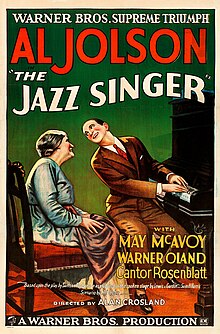 Originally, sound was opposed by the studios for many reasons. Many studios thought the public might not accept sound. Another was the actors; many were silent film stars with garish foreign accents and hadn't had proper voice or stage training meaning they would actually have to remember lines! (Oh the horror!). They had already prompted these stars and loosing them in the transition to sound could mean wasted investments. Speaking of money, sound would necessitate the building of larger sets and the purchase more expensive camera gear. Even theaters were not ready for this new technology. As the studios began to develop sound films starting with The Jazz Singer, Talkies eventually became the norm within a few years.